
The Test Record
One record, cut for this instrument
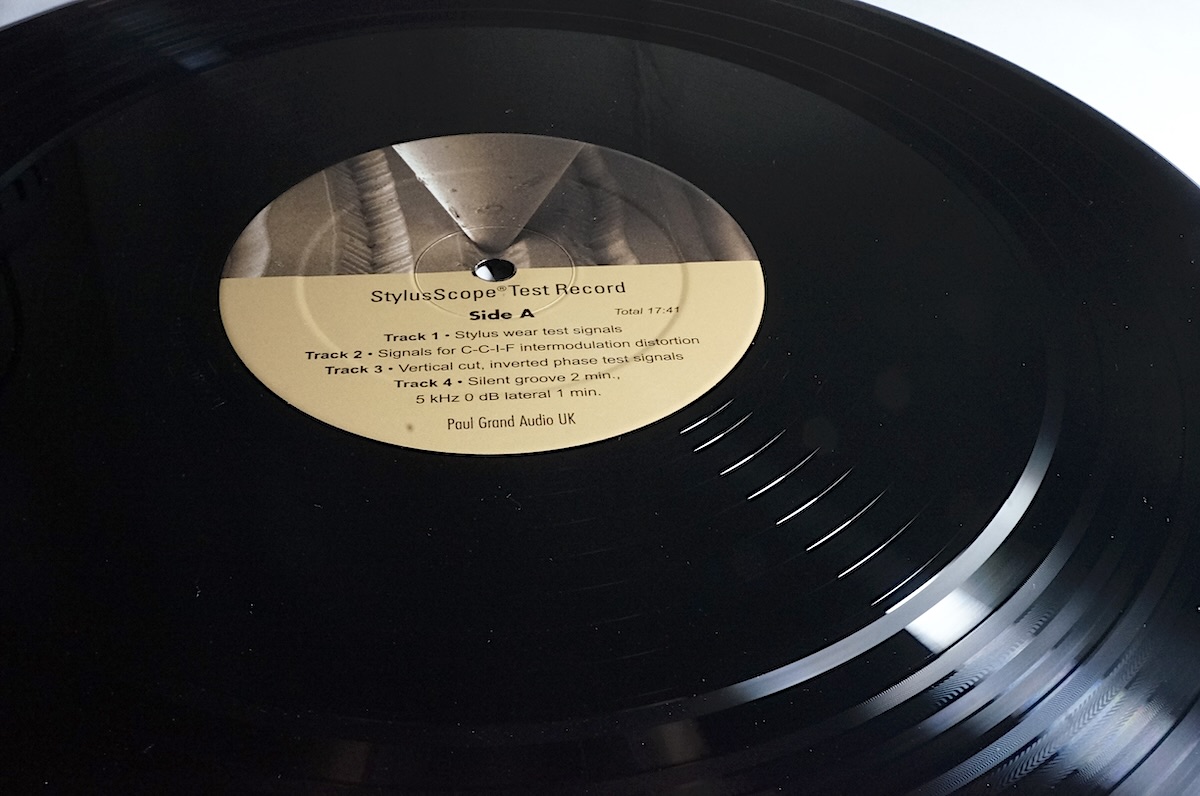
A measurement is only as good as the signal it reads. So StylusScope does not rely on a third-party test record: it comes with its own.
Why it matters
“0 dB” is not a unit
Test records do not share a common reference level. “0 dB” on one record can be a different groove velocity from “0 dB” on another, sometimes quoted as a peak value and sometimes as RMS. A distortion figure from one record therefore cannot be compared with one from another. Every StylusScope reading, from every owner, comes from the same pressing of the same master, which is what makes the Collective Data possible at all.
Who made it
Cut at Artone, pressed in Haarlem
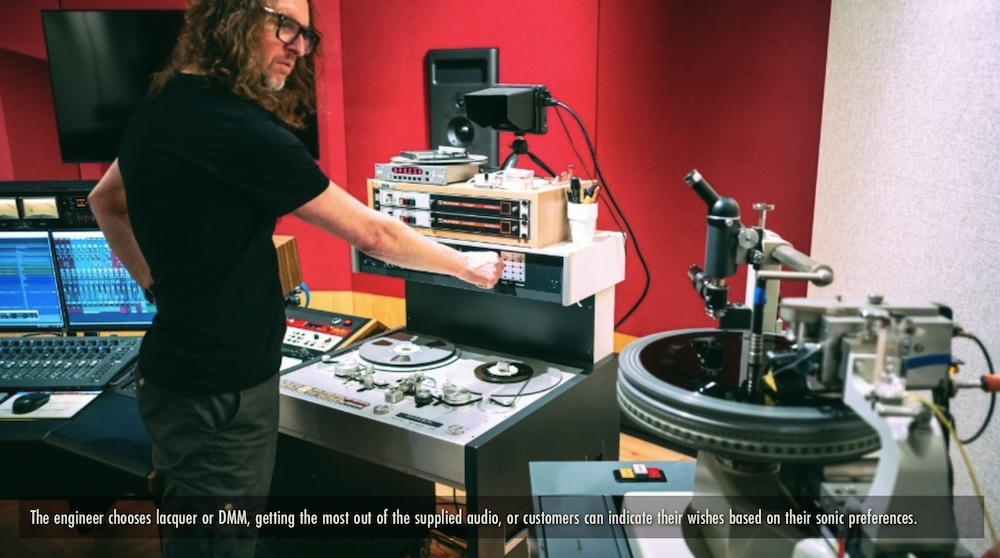
I specified the tracks; the master was cut at Artone Studio and the record pressed by Record Industry in Haarlem, the Netherlands. The plant was founded in 1958 under the Artone name, became Sony’s main vinyl production facility for Europe, and in the 1980s pressed more than 35 million copies of Michael Jackson’s Thriller.
What is on it
Two sides, every test announced
Each test signal is announced by voice before it plays, with five seconds of silence around it, so you always know where you are. 12-inch, 33⅓ rpm.
| Track | Content | Level |
|---|---|---|
| A1 | Stylus wear test: 5 kHz, then 8 kHz and 3 kHz, 1 minute each | −12 dB |
| A2 | Intermodulation, lateral: 1 + 1.4, 4 + 4.4, 8 + 8.4, 13 + 14 kHz | −12 dB |
| A3 | Vertical cut: 4 kHz, 8 kHz, 4 + 4.4, 13 + 14 kHz | −12 dB |
| A4 | Silent groove (2 min), then 5 kHz lateral (1 min) | 0 dB |
| B1 | Reference tone, 1 kHz, 5 cm/s, 2 minutes | 0 dB |
| B2 | Frequency response, 1 kHz then 100 Hz to 20 kHz, 30 s each | −20 dB |
| B3 | Channel separation and azimuth, 1 kHz and 10 kHz, one channel at a time | 0 / −12 dB |
| B4 | Sweep 1–20 kHz, then white noise, 1 minute each | −16 dB |
Some tracks, such as the vertical cuts, are there for measurements that future firmware may add. They need no new record.
Next
Put it to work
See what the record shows in your own system.